Dental Hygiene in Edgware
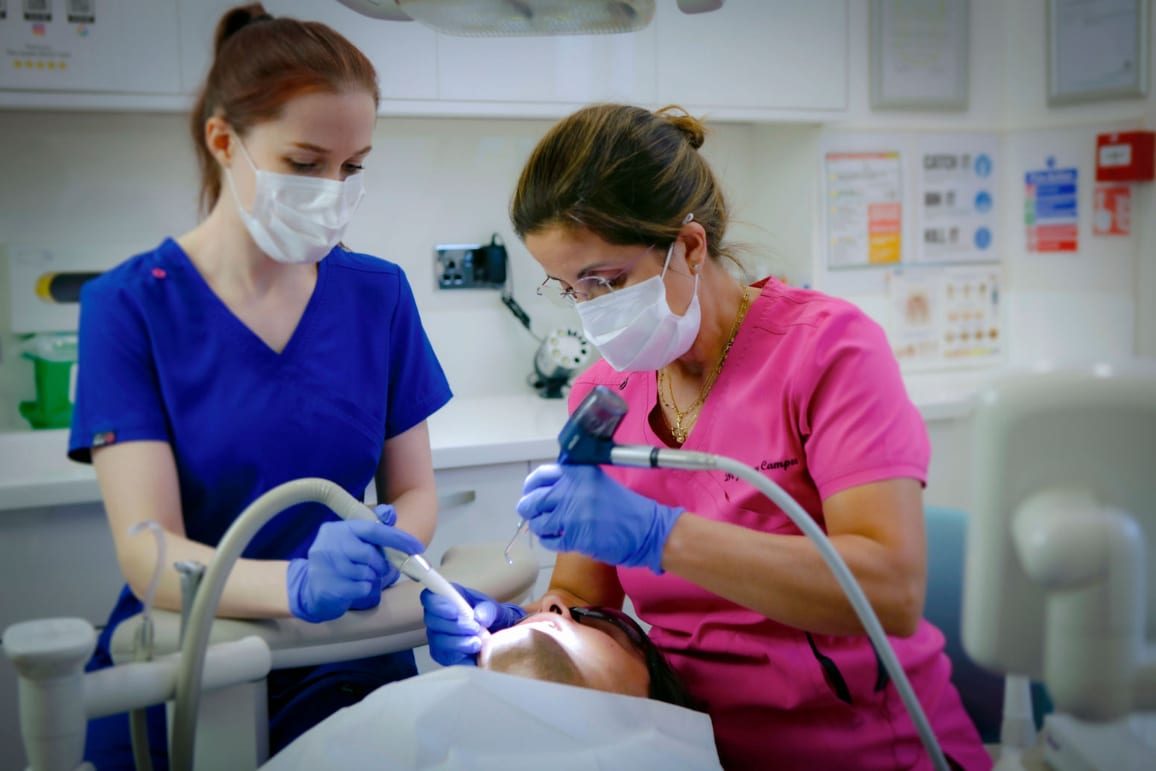
Professional hygiene with Bernita and Isabel, our experienced hygienists. Scale, polish, stain removal and personalised advice that protect your teeth between check-ups.
Book Online opens in our secure Dentally Portal — verified by SMS. Pick "Hygiene" on the next screen.
from £80
- Removes plaque and tartar brushing can't reach
- Cleaner, fresher mouth and brighter smile
- Prevents gum disease and tooth decay
- Personalised home-care advice
- Optional AirFlow stain removal lifts coffee, tea and wine staining traditional polishing can't reach
Why hygiene matters
You can be brilliant at brushing and flossing at home and still build up plaque and tartar in places you simply can’t reach. Professional hygiene appointments remove what home care leaves behind — protecting your teeth, your gums and your long-term oral health. Patients who maintain regular hygiene visits typically have fewer fillings, healthier gums, less bad breath and a brighter smile — without the cost or stress of more involved general dentistry further down the line.
The other half of the value is diagnostic. Your hygienist sees your mouth more often than your dentist does, and is usually the first to spot the early signs of decay, gum recession, cracks in old fillings or the very first stages of gum disease. Catching any of those in their first few months changes how easy they are to put right — and how much they cost to fix.
Meet your hygienists
Bernita Shelley has over 20 years’ experience and a warm, gentle manner, and is especially good with nervous patients — she takes the time to build a genuine rapport and put you at ease. She treats good oral health as part of your overall wellbeing, pairing gentle hygiene care with personalised, practical advice you can keep up at home. Patients who travel to us from Edgware, Stanmore and Mill Hill see the same hygienist visit after visit, which means the running picture of your gum health stays with one clinician rather than getting fragmented across rotating staff. That continuity is the single biggest reason hygiene-led prevention actually works.
Isabel Puente joins her in the hygiene chair. Isabel qualified in Dentistry in Barcelona in 2022 and practises at Campos as a dental hygienist. Naturally talkative and approachable, she believes good hygiene care starts with clear communication: she explains each step as she goes and leaves you with practical advice you can actually follow at home. She is particularly enthusiastic about AirFlow stain removal, available as an optional extra alongside your hygiene visit.
What’s included in a hygiene visit
A routine hygiene appointment runs to thirty minutes minimum — long enough to do the job properly without rushing — and is structured the same way every time, so you always know what’s coming.
Assessment
A quick look at your gums, a check on any specific concerns you’ve raised, and a glance at the areas your dentist has flagged from your last examination. If pocket measurements are due, we take them at this point.
Ultrasonic scaling
Gentle removal of tartar from above and below the gum line using ultrasonic instrumentation, which uses high-frequency vibration and a fine water spray rather than the older approach of mechanical scraping. The result is more thorough and considerably more comfortable. Hand instruments come out for the finer detail work where the ultrasonic can’t reach.
AirFlow stain removal
Where you’d benefit, the AirFlow system uses a fine spray of warm water and a calcium-based powder to lift coffee, tea, wine, curry and tobacco staining far more effectively than traditional polishing paste. It’s particularly useful around the lower front teeth — where staining accumulates fastest — and around orthodontic appliances or implants where ordinary polishing struggles. AirFlow is available as an optional extra alongside your hygiene visit.
Polish and floss
A final polish to leave the tooth surface smooth (smooth surfaces accumulate plaque more slowly than rough ones), followed by flossing and tailored home-care advice — brushing technique, the right interdental tools for your gaps, and any habit changes that will make the next visit easier.
Periodontal (deep) cleaning
If your gums are inflamed or you have established gum disease, a routine clean may not be enough. We offer deeper periodontal treatment from £180 — usually under local anaesthetic, sometimes over two appointments — that cleans below the gum line to halt the disease. Full detail on that, the stages of gum disease and the long-term maintenance protocol is on the gum disease treatment page. Periodontal patients typically need hygiene visits every three or four months for several years rather than the standard six-month interval — keeping the disease stable is a maintenance job, not a one-time fix.
Between hygiene visits — what to do at home
What happens in the six months between hygiene visits matters more than the appointment itself. The single most useful conversation we have with patients is about the tools and technique they use day to day at home — most of the wins are small adjustments rather than wholesale changes.
Toothbrush — electric or manual?
For most adults, an electric toothbrush — oscillating-rotating or sonic — removes plaque more effectively and more consistently than a manual brush, especially in awkward areas at the back of the mouth and along the gum line. The evidence on this is now well established. That said, a manual brush used properly for two full minutes twice a day will out-clean an electric brush used carelessly for thirty seconds. If you’re staying with a manual, choose a soft-bristled head — medium and hard bristles abrade enamel and contribute to gum recession over time. Replace the head (or brush) every three months, or sooner if the bristles are splayed.
Cleaning between your teeth
Brushing alone reaches roughly two-thirds of every tooth surface — the area between teeth, where most decay starts in adults, isn’t on that list. Interdental cleaning matters more than most patients realise. Interdental brushes (the little colour-coded tools sold under brand names like TePe and Curaprox) are usually easier to use than floss for adults, particularly where there’s any gap between teeth or any history of gum disease. We’ll size them to your mouth at your hygiene visit. Floss still has its place for very tight contacts where an interdental brush won’t fit. Water flossers are a useful supplement, especially around implants or fixed orthodontic retainers, but they don’t replace mechanical interdental cleaning — they work alongside it.
Mouthwash
Useful but optional, and timing matters. Fluoride mouthwash used at a different time from brushing (lunchtime is ideal) gives an extra dose of fluoride that helps with decay prevention; using it straight after brushing rinses the more concentrated fluoride in toothpaste off your teeth, which is counterproductive. Alcohol-free formulations are gentler on the soft tissues. Antibacterial mouthwashes containing chlorhexidine (such as Corsodyl) are useful short-term during gum-disease treatment but cause staining if used long term — we’d recommend them in courses rather than indefinitely.
Sugar, snacking and acid
The frequency of sugar exposure matters more than the total amount — three biscuits at one tea break is gentler on your teeth than the same three biscuits spread across an afternoon. Acidic drinks (fizzy drinks, fruit juice, sparkling water with citrus, lemon in hot water first thing) soften enamel for around twenty minutes after each sip — don’t brush during that window, and ideally drink them with meals rather than between them. Patients dealing with tooth erosion from acidic diet often see big improvements from this single habit change alone.
A simpler, cheaper way to stay on top of hygiene
Our adult dental plan at £21.50/month includes two examinations and two hygiene visits a year — plus 10% off any further treatment. For most patients in Edgware, Stanmore and Mill Hill, that’s better value than paying as you go, and it spreads the cost predictably across the year rather than landing in two bigger payments. Children’s plans start at £5/month, and teen plans at £10/month. Compare plans →
Book your hygiene appointment
If it’s been a while, please don’t put it off any longer — hygiene visits are the single most cost-effective thing you can do for your long-term oral health, and the longer the gap the easier it is to leave it for another year. Get in touch and we’ll find you a slot with Bernita at a time that works around your week.
Frequently asked
How often do I need a hygiene appointment?
Does a hygiene appointment hurt?
What does a hygiene visit include?
How much does a hygiene appointment cost?
Why is your hygiene visit £80 when an NHS clean is much cheaper?
Will it hurt if I haven't been to a hygienist for a long time?
You might also be looking at.

General Dentistry
from £50Routine, preventative and family dentistry — the foundation of a healthy smile. Check-ups, hygiene visits, tooth-coloured fillings, and oral cancer screening for every age.
Learn more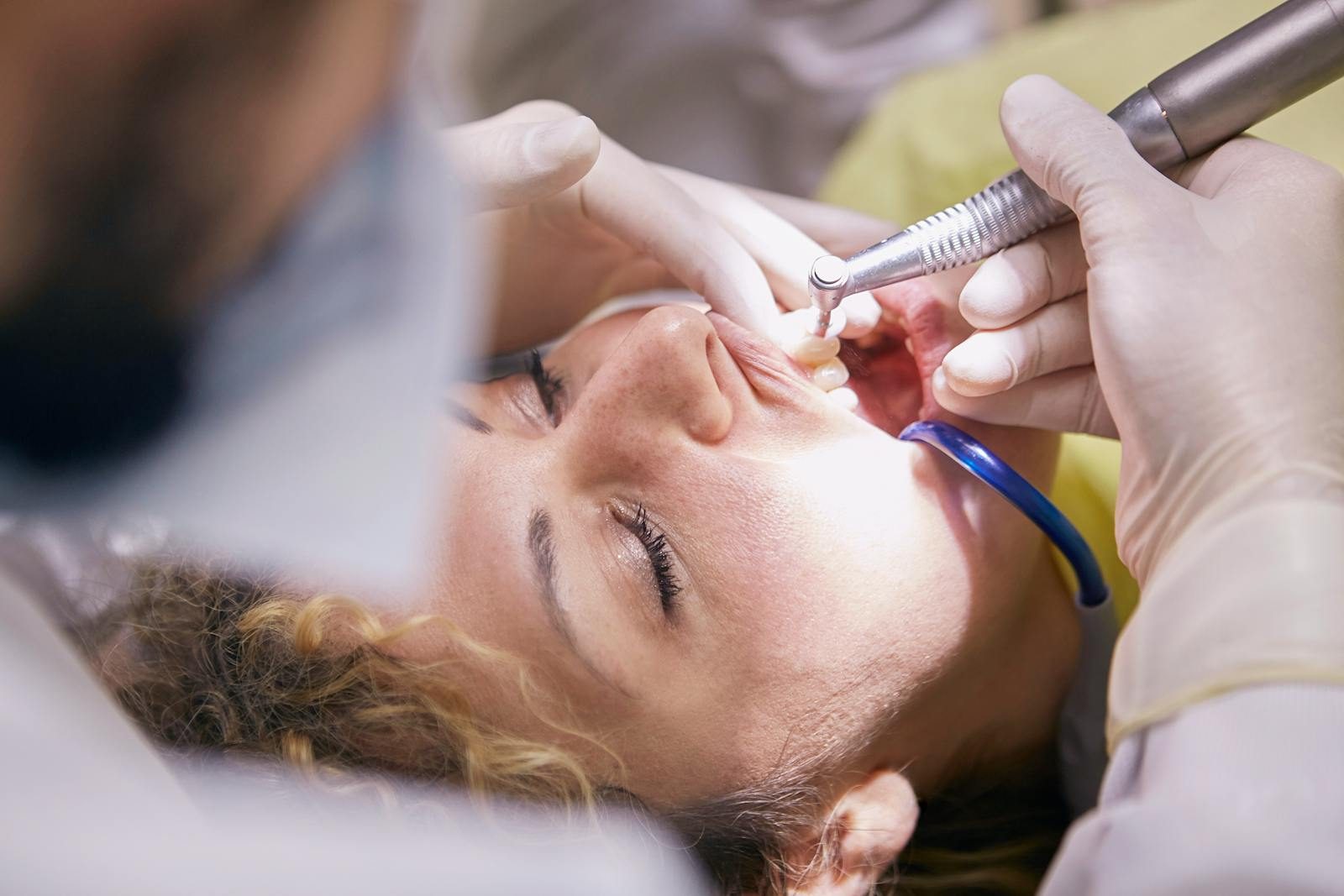
Gum Disease Treatment
from £180Expert assessment and treatment of gum disease — from early gingivitis to advanced periodontitis. Healthy gums are the foundation of a healthy mouth.
Learn more
Teeth Whitening
from £350Professional whitening that's safer and more effective than over-the-counter kits. Choose a gentle at-home system or a faster in-surgery option for a noticeably brighter smile.
Learn moreFind us in Edgware.
Free 30-minute parking out front and a step-free entrance. Pop in for a look or call ahead — we usually answer within a few rings.
Campos Dental
70 Edgware Way
Edgware, HA8 8JS
Call us
020 3971 2000Contact us
Send us a message →Opening hours
- Mon – Fri 9:00 am – 5:30 pm (closed 1–2 pm)
- Sat by appointment
- Sun closed
Considering this treatment?
Book a hygiene visit online — we'll keep your gums healthy, lift staining, and give you a personal plan for cleaning between visits.
Book Online opens in our secure Dentally Portal — verified by SMS. Pick "Hygiene" on the next screen.