Dental Crowns in Edgware
Custom-made caps that restore broken, cracked or root-treated teeth. Available in porcelain, ceramic and metal options to suit appearance, position and budget.
Book Online opens in our secure Dentally Portal — verified by SMS. All treatment plans start with a check-up.
from £550

- Restores full strength to damaged or root-treated teeth
- Hand-finished to match neighbouring teeth
- Choice of full ceramic, precious metal or non-precious metal
- Protects against further damage and decay
- Typically lasts 15+ years with good care, often 20 or more
What is a dental crown?
A dental crown is a custom-made cap that covers the entire visible part of a tooth. It restores the tooth’s shape, size, strength and appearance — and is one of the most reliable restorative treatments in dentistry, used for over a century in some form and refined steadily as materials and techniques have improved.
Crowns are commonly used to:
- Repair a tooth that’s heavily filled, cracked or chipped
- Protect a tooth after root canal treatment
- Cover a discoloured or misshapen tooth where veneers wouldn’t give enough coverage
- Anchor a dental bridge or support an implant
At our Edgware practice we make crowns for patients across Edgware, Stanmore, Mill Hill and the surrounding areas — most often after a tooth has fractured around a large old filling, or to protect a root-treated tooth from cracking under chewing load. The page below walks through how we decide between a crown, an onlay and a filling, and what to expect at every stage.
Crown vs onlay vs filling — making the decision
One of the most useful conversations we have at consultation is about the right size of restoration. The honest principle is: do the least drilling that genuinely solves the problem and protects the tooth long term. That means a crown isn’t always the answer — sometimes an onlay or a well-placed filling is the right call.
Filling
A filling is the smallest restoration. Tooth-coloured composite, packed and bonded into a small cavity, hardens in minutes and is finished in a single appointment. Suitable when the cavity is small to moderate and there’s plenty of sound tooth structure left to support it. Fillings are quick, conservative and the right answer for the great majority of routine decay.
Onlay
An onlay sits between a filling and a crown. Where a filling is built up directly in the mouth, an onlay is made in the lab — usually in ceramic or gold — and bonded onto the tooth at a second visit. The key difference from a crown is that an onlay only covers the parts of the tooth that need rebuilding (typically the biting surface and one or more of the cusps) and leaves the rest of the natural tooth untouched. For teeth with a moderately large old filling, a cracked cusp, or a fracture that doesn’t extend all the way down, an onlay protects the tooth without removing the additional structure a full crown requires. This is the option many older treatment plans skipped over and went straight from “filling” to “crown” — modern materials make onlays a reliable middle option that we use regularly.
Crown
A full crown is reserved for teeth where there isn’t enough sound structure left to safely take a filling or an onlay, or where the chewing forces would crack what remains. Classic indications are a tooth that has fractured a cusp around an old large filling, a root-treated back tooth (which is more brittle than a tooth with a live nerve), or a tooth that’s already cracked and at risk of splitting if not protected.
At your consultation we’ll explain which option fits your tooth, with reference to the X-rays and the clinical picture in front of us. We don’t crown teeth that genuinely only need an onlay — and we’ll be honest if a smaller restoration is the right answer.
Crown materials at Campos Dental
- Non-precious metal crowns — from £550. Exceptionally strong, ideal for back molars where appearance matters less than chewing strength. The bite-surface wear on the opposing tooth is gentle, which is why some patients with heavy bite forces specifically prefer metal at the back of the mouth.
- Precious metal crowns — from £600. Beautiful longevity and a kinder fit to opposing teeth than full-ceramic options. The classic gold crown is still — in many clinical situations — the longest-lasting restoration we can place. Less popular cosmetically than it was, but a fair number of patients with existing gold crowns at the back ask us to match the material when an adjacent crown is needed.
- Full ceramic crowns — from £750. Indistinguishable from a natural tooth. The first choice for front teeth and visible upper molars. Modern ceramic crowns are typically built on a high-strength zirconia core with porcelain layered on the outside for the natural appearance, which gives them strength comparable to metal options while looking like enamel.
How a dental crown is fitted
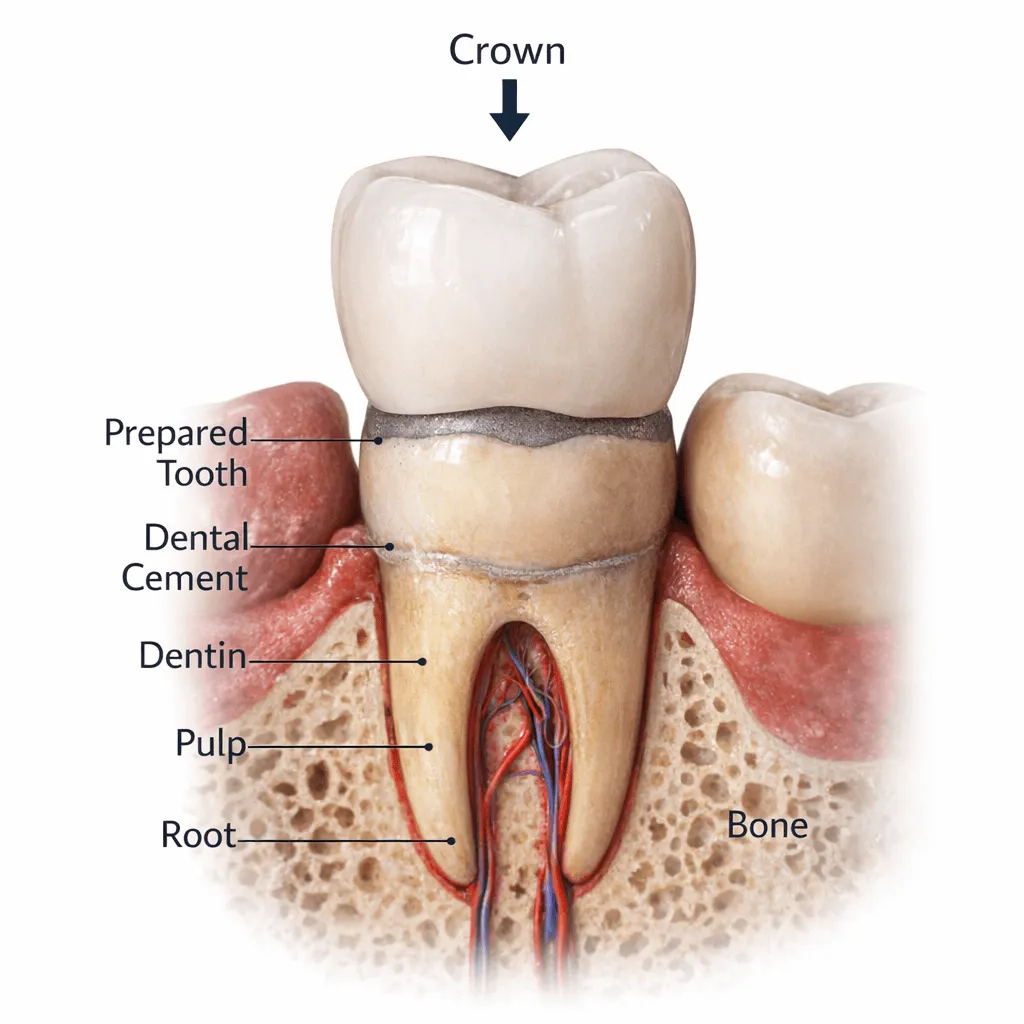
A crown sits over the prepared tooth like a cap, secured with dental cement onto the root that remains beneath the gum line. The diagram below shows where the crown meets the prepared tooth and the natural tissues around it.
The crown procedure
- First visit. We carefully prepare the tooth under local anaesthetic — removing any decay and old filling material, then shaping it so the crown will fit. We take precise digital impressions or scans, record the bite, and match the shade of your natural teeth in good light. A temporary crown protects the tooth while the final one is made.
- Lab fabrication. Your crown is hand-made by our ceramist over 10–14 days, with the shade matched to your neighbouring teeth and the bite checked against the records taken at the first visit.
- Second visit. The permanent crown is checked for fit, colour and bite, then cemented in place. The whole appointment is usually under an hour. We polish the margins, check that floss passes cleanly, and walk you through how to care for the new crown before you leave.
Aftercare — looking after your crown
A crown isn’t fitted and forgotten. The crown itself doesn’t decay, but the natural tooth root underneath very much can — and the most common reason a crown fails is decay at the margin where it meets the root, almost always because plaque control has slipped at that single junction. The aftercare routine is straightforward but worth doing properly from day one.
- Brush twice a day with a fluoride toothpaste, paying particular attention to the gum line around the crown. An electric brush (oscillating or sonic) tends to give better margin cleaning than a manual brush.
- Floss daily — pass the floss carefully under the contact point and along the side of the crown. The margin is more vulnerable to decay than a natural tooth surface because the junction collects plaque.
- Hygiene visits twice a year through our dental hygiene service keep the margin clean and let us catch any early issues before they become bigger problems. Our hygienists will tailor the cleaning routine for your specific situation and re-demonstrate the technique if anything’s slipped.
- Nightguard if you grind. If you clench or grind your teeth at night — and many adults do without realising — a thin nightguard prevents the chronic micro-fracturing that shortens the life of crowns and the natural teeth around them. Talk to us about a nightguard assessment at any time.
- Avoid using teeth as tools. Ice cubes, hard sweets, pens, fingernails and packaging are the most common culprits in the cracked-crown stories we see. Modern crown materials are very strong but not invulnerable.
For most patients on our adult dental plan, the included examinations and hygiene visits cover everything a crown needs in the way of ongoing oversight. Plan membership often works out as the most cost-effective arrangement long term for patients with significant restorative work in their mouths.
Why crowns from Campos Dental
- High-quality materials only — we don’t use the cheapest labs. Our ceramist hand-finishes shade and contour for visible crowns rather than using mass-produced shells.
- Shade-matched in natural light to your existing teeth. Shade is the difference between a crown that’s invisible and one your friends notice.
- Honest scoping — we won’t crown a tooth that genuinely only needs an onlay or a filling. We’ll say so if a smaller restoration is the right answer.
- Restorative work is backed by our care commitment — when you keep up regular hygiene visits as part of our adult dental plan, we’ll stand behind what we’ve placed. Talk to us about specific cover for the treatment you’re considering.
- Easy to get to — we’re at 70 Edgware Way, HA8 8JS, straightforward for patients travelling in from Edgware, Stanmore, Mill Hill and the surrounding North London area.
Considering a crown?
All treatment plans start with a check-up. Book yours online — we’ll examine the tooth, take any X-rays needed, and talk you through the options — crown, onlay, filling, or no immediate intervention — with the honest reasoning behind each. Pricing is fixed and all-inclusive once we’ve quoted, and 0% finance is available via the finance page if you’d like to spread the cost. If you’d rather chat first, get in touch and we’ll answer questions on the phone before you commit to a visit.
Further reading from the blog
- Crown or filling? When a tooth needs more than a fix — the structural and biomechanical reasoning behind the decision, the middle-ground options (composite inlays and onlays), and lifespan comparisons.
Frequently asked
Why might I need a crown?
How long does it take to fit a crown?
What's the difference between a porcelain crown and a metal one?
How much do crowns cost?
How long does a crown last and what affects its lifespan?
What happens if my crown comes off — is it an emergency?
You might also be looking at.
Dental Bridges
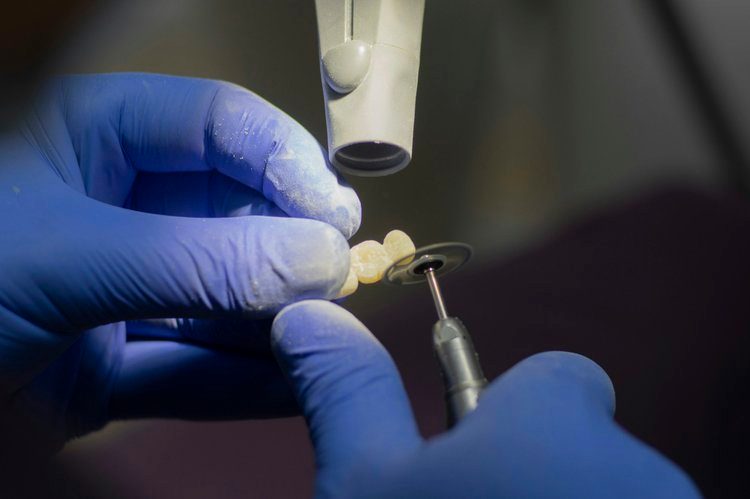
Quoted at consultationA fixed, custom-made appliance that bridges the gap left by one or more missing teeth — supported by neighbouring teeth or implants.
Learn more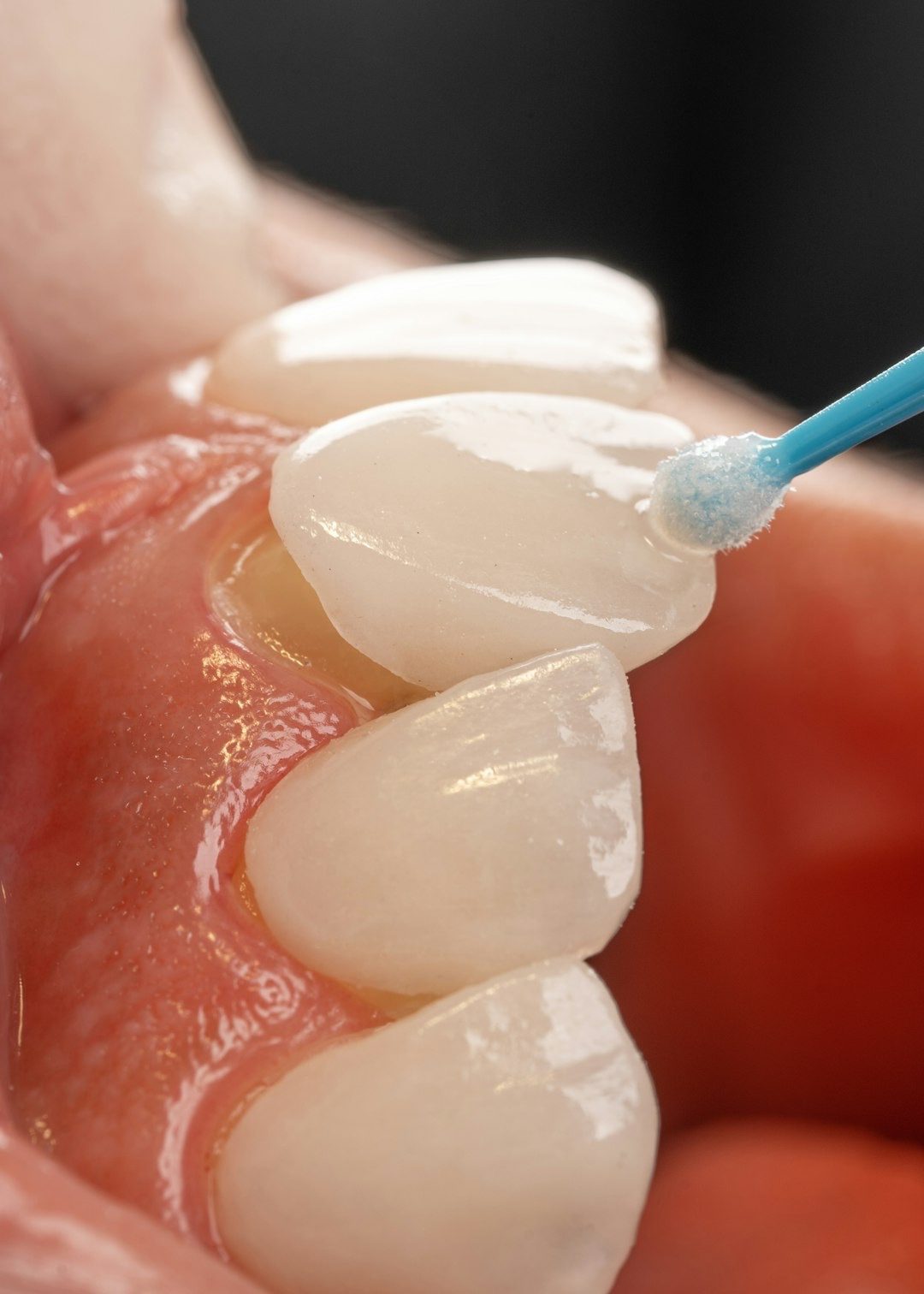
Porcelain Veneers
from £550 per toothHand-crafted porcelain shells bonded to the front of your teeth to mask chips, stains, gaps and minor misalignment. A long-lasting cosmetic transformation.
Learn more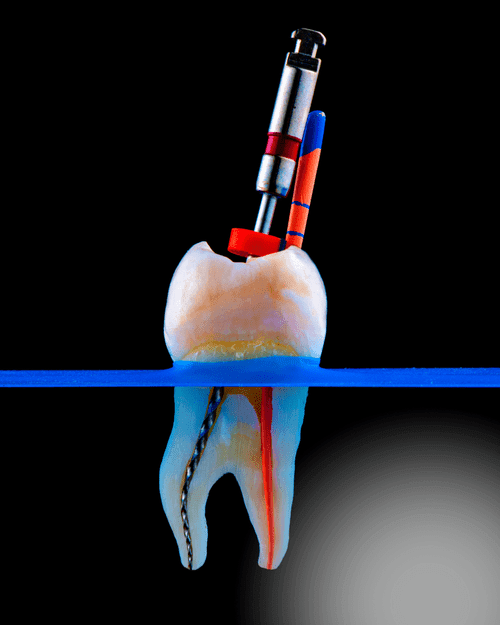
Root Canal Treatment
from £350Modern root canal treatment to save an infected or damaged tooth — gentler than its reputation, and far better than losing the tooth.
Learn moreFind us in Edgware.
Free 30-minute parking out front and a step-free entrance. Pop in for a look or call ahead — we usually answer within a few rings.
Campos Dental
70 Edgware Way
Edgware, HA8 8JS
Call us
020 3971 2000Contact us
Send us a message →Opening hours
- Mon – Fri 9:00 am – 5:30 pm (closed 1–2 pm)
- Sat by appointment
- Sun closed
Considering this treatment?
All treatment plans start with a check-up. Book yours online — we'll talk you through the options for this treatment, explain pricing, and only recommend treatment if it's genuinely right for you.
Book Online opens in our secure Dentally Portal — verified by SMS. All treatment plans start with a check-up.