Why orthodontics?
Orthodontics is the branch of dentistry that corrects the alignment of teeth and jaws. Straightening teeth isn’t only cosmetic — it makes them easier to clean, reduces wear on individual teeth, lowers the long-term risk of decay and gum disease, and helps your bite distribute force evenly. The shift in adult demand over the last decade has been dramatic: when most of our team trained, orthodontics was almost entirely about teenagers; today, more than a third of our orthodontic patients are adults — most of them coming to fix something that has bothered them since school, or to address relapse from teenage braces whose retainers were not kept up.
We provide orthodontic treatment for children, teens and adults — with appliance choices tailored to your case and lifestyle. Most of our orthodontic patients come to us from across Edgware, Stanmore, Mill Hill and the wider North London area. We see complex bite cases referred to specialists, and we say so openly when that’s the right answer.
Early intervention for children — when starting young matters
Most fixed-brace treatment runs between ages eleven and fourteen, once the majority of adult teeth are through. But there’s a smaller, specific group of cases where intervention while the jaw is still growing produces a markedly better result than waiting — and missing the window means losing options.
When to bring a child for an orthodontic assessment
We assess all children’s bite development from around age seven as part of routine check-ups, and recommend a dedicated orthodontic consultation if anything is flagged. The vast majority will not need any intervention at this age — they go on the watch-and-review list and we revisit it as the teeth come through. A small percentage benefit from what’s called Phase I (or interceptive) orthodontic treatment between ages seven and ten.
What Phase I treatment looks like
Phase I treatment is targeted at specific developmental issues — it’s not a way of starting braces early for its own sake. The most common indications are:
- A narrow upper jaw causing a crossbite — where one or more lower teeth bite outside the upper teeth rather than inside. Left untreated through puberty, this asymmetric bite often shifts the lower jaw permanently to one side, with consequences for facial symmetry and TMJ health later in life. A short course of palate expansion using a fixed expander appliance (typically four to six months, often as a child sleeps) widens the upper jaw while the mid-palatal suture is still flexible. After about age twelve to fourteen, the suture fuses and the same expansion becomes much harder, often requiring surgery in adulthood.
- Severe protrusion of the upper front teeth, where the upper incisors stick well forward of the lower and are at increased risk of trauma in a playground fall or sports collision. Functional appliances (such as a twin-block) used through the growth spurt can reduce the protrusion meaningfully and reduce the injury risk.
- Habit-related problems — persistent thumb-sucking past age six or seven, tongue-thrust patterns that are distorting the bite — sometimes benefit from short-term appliances designed to break the habit.
Phase I treatment is typically followed by a watch-and-review break of two or three years until all the adult teeth are through, and then a shorter Phase II of fixed braces or aligners to finish the alignment. Total treatment time across both phases is usually comparable to (or only slightly longer than) waiting until the early teens — but the result on the underlying jaw and bite is better than late-only treatment can achieve.
We are conservative about recommending early intervention and won’t push it where simply waiting and reassessing is the right answer. If you’d like a child’s bite assessed, our full children’s dentistry service builds the orthodontic check into routine appointments, or you can book a dedicated orthodontic consultation directly.
Treatment options
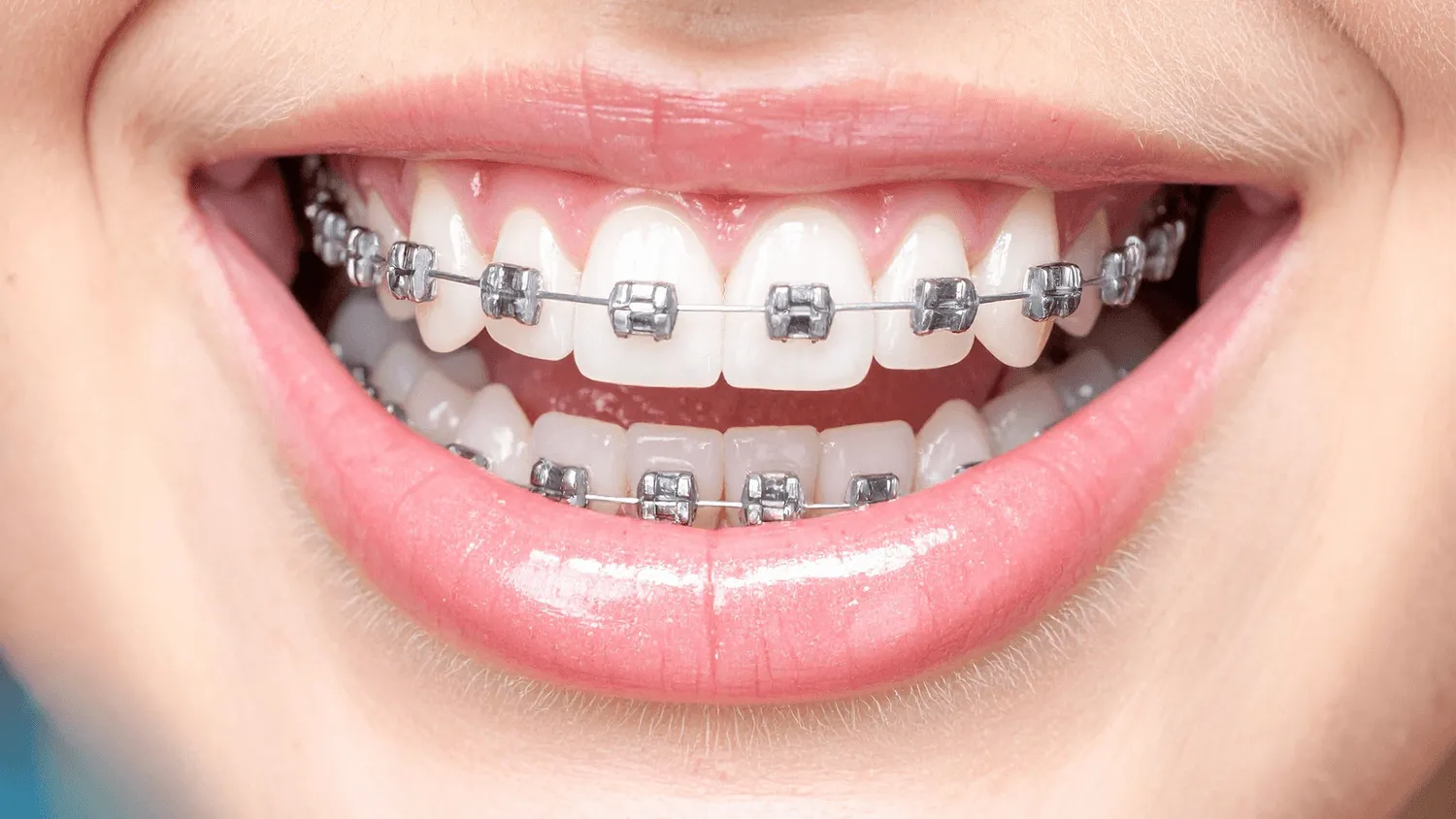
Fixed braces (from £1,500)
The gold standard for complex movements. We offer traditional metal brackets and tooth-coloured ceramic brackets for a more discreet look. Worn 24/7 — treatment is highly predictable and able to correct cases Invisalign cannot.
Invisalign clear aligners
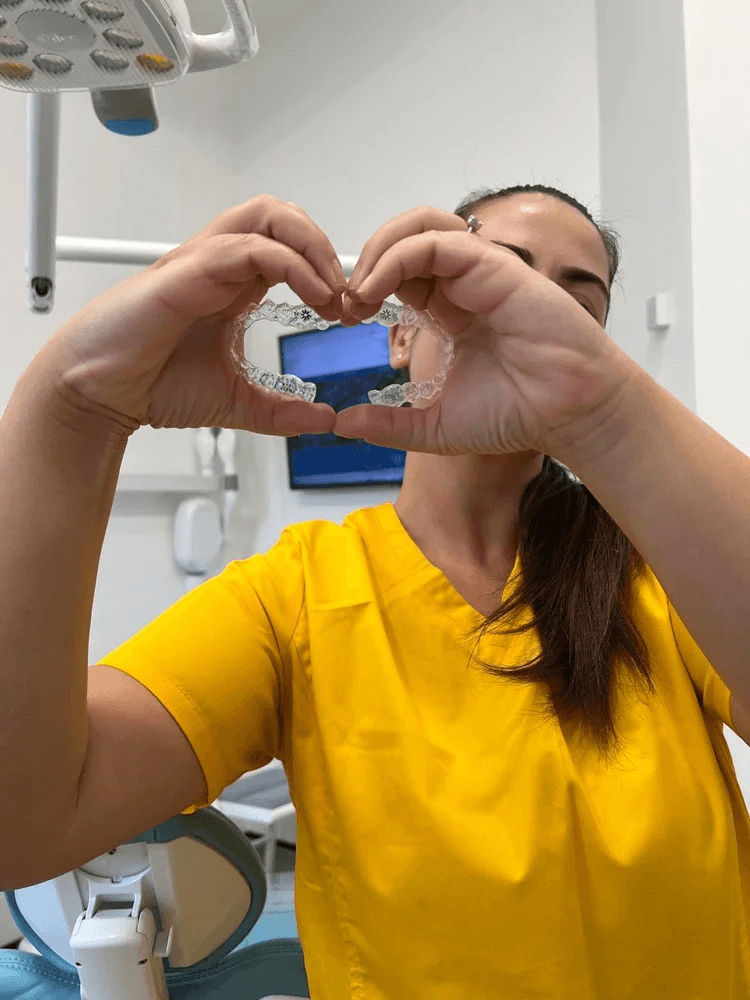
Custom-made, near-invisible plastic aligners worn 20–22 hours per day. Removable for eating and brushing. The first choice for adults and image-conscious teens. Learn more about Invisalign →
Retainers
Equally important as the active treatment. We provide both fixed and removable retainers to keep your finished smile stable for life. Teeth have a natural lifelong tendency to drift, and that drift doesn’t stop because braces or aligners come off — unmanaged, much of the careful work of the previous year quietly undoes itself over five to ten years. Most patients keep their retainers in nightly indefinitely.
Fixed braces vs Invisalign — when each wins
Both approaches work, and the right answer depends on your case, your lifestyle and your tolerance for compromise. Here’s the honest comparison rather than a marketing pitch.
| Factor | Invisalign | Fixed braces |
|---|
| Appearance | Near-invisible | Visible; ceramic brackets reduce this |
| Comfort | No wires or brackets — minimal soft-tissue irritation | Initial rubbing common; settles within a fortnight |
| Eating | No restrictions — trays come out for meals | Avoid hard, sticky, crunchy foods |
| Cleaning | Brush and floss normally with trays out | Significantly harder; risk of decalcification |
| Compliance | Entirely dependent on you wearing them 20–22 hrs/day | Always on — works whether you co-operate or not |
| Complex cases | Excellent for mild-to-moderate; limits at the severe end | Best for severe rotations, large movements, extraction cases |
| Treatment time | 9–18 months for most adults | 12–24 months typical |
| Starting price | From £1,600 (Express); typically £2,500–£4,500 (Comprehensive) | From £1,500 |
Invisalign
- Appearance
- Near-invisible
- Comfort
- No wires or brackets — minimal soft-tissue irritation
- Eating
- No restrictions — trays come out for meals
- Cleaning
- Brush and floss normally with trays out
- Compliance
- Entirely dependent on you wearing them 20–22 hrs/day
- Complex cases
- Excellent for mild-to-moderate; limits at the severe end
- Treatment time
- 9–18 months for most adults
- Starting price
- From £1,600 (Express); typically £2,500–£4,500 (Comprehensive)
Fixed braces
- Appearance
- Visible; ceramic brackets reduce this
- Comfort
- Initial rubbing common; settles within a fortnight
- Eating
- Avoid hard, sticky, crunchy foods
- Cleaning
- Significantly harder; risk of decalcification
- Compliance
- Always on — works whether you co-operate or not
- Complex cases
- Best for severe rotations, large movements, extraction cases
- Treatment time
- 12–24 months typical
- Starting price
- From £1,500
When Invisalign wins
The clear answer for the great majority of adults who would not consider visible metal brackets. Mild-to-moderate crowding, spacing, post-orthodontic relapse, and simple bite improvements all respond well to aligners — and the social and professional impact is minimal. The discreet design genuinely works: friends and colleagues don’t normally notice the trays unless you point them out. Removability matters for patients with public-facing jobs, frequent client dinners or weddings to attend mid-treatment. The full detail is on the Invisalign page.
When fixed braces win
Where the case is genuinely complex — significant rotations of back teeth, large vertical tooth movements, severe bite discrepancies, or treatment requiring extractions to create major space — fixed braces still produce the most reliable result, because aligners struggle with the harder movements. Fixed braces also win where compliance is in doubt: for a teenager who would not consistently wear trays, or an adult whose lifestyle makes 22-hour-a-day discipline unrealistic, the always-on nature of bonded brackets removes the variable that most often derails aligner treatment. Cost matters too — fixed braces start from £1,500, which is meaningfully below Invisalign’s starting price. For straightforward cases on a tight budget, traditional braces remain an honest answer.
How we decide together
At consultation we examine your bite, take photos, X-rays and digital scans, and run an Invisalign 3D ClinCheck simulation where it’s relevant — so you can see the predicted outcome before committing. We then talk through the options honestly: if Invisalign will get you to the result you want, we say so. If your case is one that fixed braces will handle more reliably, we say that too. And if your situation is one that a specialist orthodontist would handle better, we say that and discuss referral options. We don’t upsell — there’s no reason to.
The treatment journey
- Consultation & records. We examine your bite, take photos, digital scans, and X-rays — then plan the treatment, including its timeline and cost.
- Fitting your appliance. Either braces are bonded onto your teeth, or you start with your first set of Invisalign aligners.
- Adjustment visits. Every 4–8 weeks we review progress and either adjust your braces or hand over the next series of aligners.
- Retention. Once your teeth are in position, we fit retainers — fixed, removable or both — to protect your result for life.
Why choose Campos Dental for orthodontics
- Both fixed and removable options under one roof, with honest advice on which suits your specific case
- We’ll only recommend orthodontics if it’s genuinely the best option — and refer to a specialist orthodontist when that’s the right answer
- Flexible 0% finance through Chrysalis Finance to spread the cost over up to twelve months
- Members of our adult dental plan receive 10% off orthodontic treatment alongside the routine plan benefits
- An established practice with patients travelling in from Edgware, Stanmore, Mill Hill and across North London
Considering orthodontics?
All treatment plans start with a check-up. Book yours online and we’ll talk you through the options, explain pricing, and show you what’s possible for your specific case. If we don’t think orthodontics is genuinely the right answer for what’s bothering you, we’ll say so — and we’ll discuss the alternatives. Get in touch to book.