Your Child's First Dental Visit: What to Expect (and How to Make It a Good One)
When to bring your child for their first dental visit, what happens at the appointment, how to prepare them, and the things parents do well, and the things parents accidentally do that make later visits harder.
- children
- preventative
- patient guide
- family
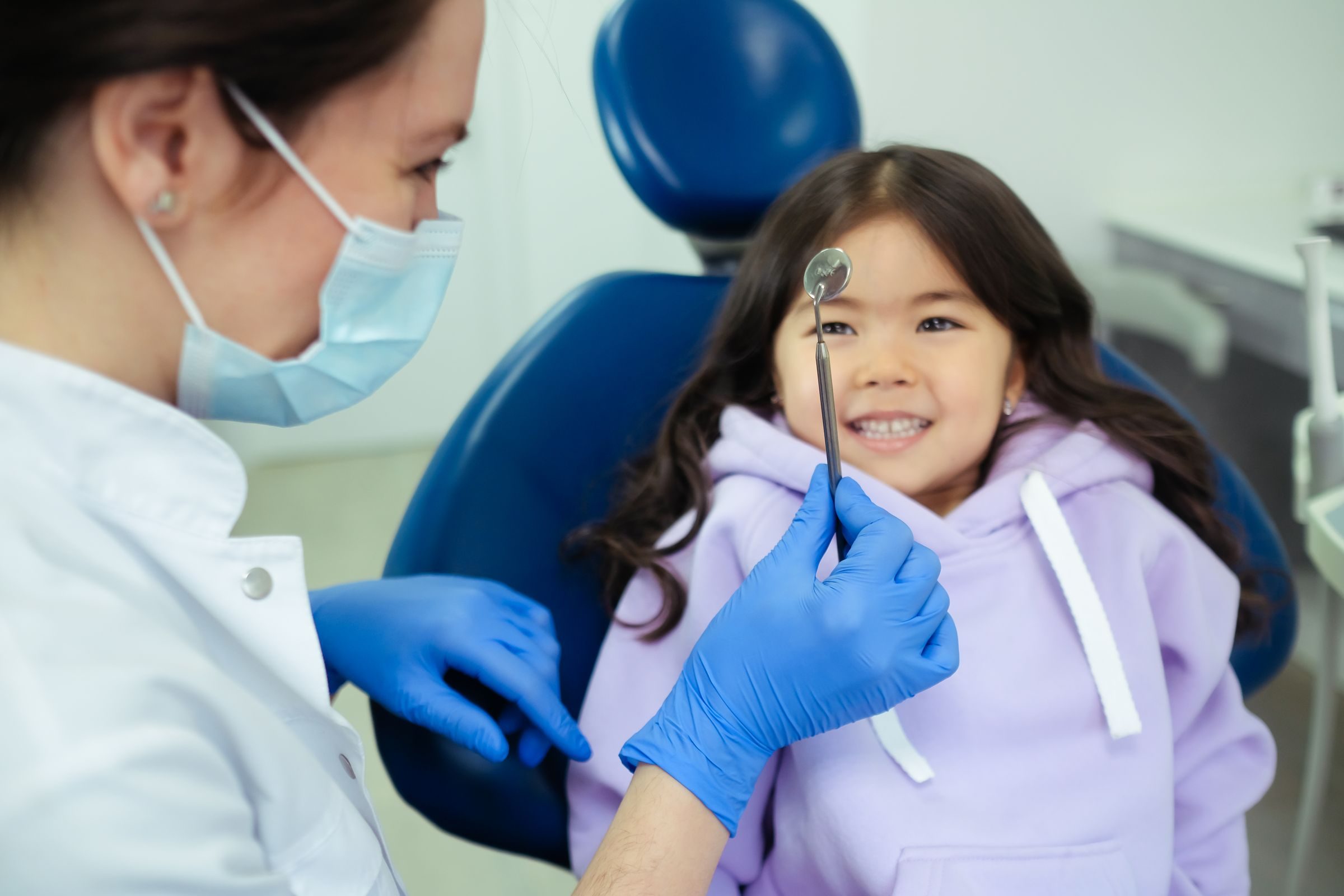
The single most useful thing parents can do for their child’s relationship with the dentist is to make the first visit a non-event. Not a milestone, not a “well done you didn’t cry”, not a thing the child has to be brave about. Just a routine appointment in a calm room, with a friendly person who looks in their mouth for five minutes and tells them they have lovely teeth.
This post covers when to come, what we do, how to prepare your child, and the small things we’d quietly ask parents not to do.
When to bring your child
The official UK recommendation (from the British Society of Paediatric Dentistry) is to register children by the age of one, or when the first tooth appears, whichever comes sooner. At Campos Dental we welcome children from any age. In practice, the most common pattern we see is:
- Under 2: bring the child along to your own appointment. They sit on your lap, the surroundings become familiar, and the practice is just somewhere mum or dad goes. No examination needed.
- Age 2–3: first formal examination. Five-minute visit, child sits in the chair or on your lap, we count their teeth (“one, two, three… all the way to twenty if you have them all”), look briefly, and book them back in six months.
- Age 3+: full routine visit, with X-rays only if there’s a clinical reason. Child sits in the chair on their own.
Children’s examinations are £25. Our Children’s Plan is £5 a month for ages 6–12 and includes two exams a year, hygiene advice, fluoride varnish where appropriate, X-rays as needed, and 10% off any further treatment. Most families find it pays for itself within the first year.
On timing, if you are trying to work out when in the year to come, our post on back-to-school dental check-ups makes the case for the last two weeks of August, which is the easiest appointment of the year to actually keep.
What happens at the appointment
For a 2–4-year-old’s first formal visit, the appointment usually looks like this:
- The “tell, show, do” walk-through. We tell the child what we’re going to do, show them the mirror and the little light, and let them touch the chair before we do anything. Most children are curious rather than nervous once they’ve held the instruments.
- Counting the teeth. That’s the headline activity. We don’t probe gums in young children unless there’s a reason; we look, we count, we ask the child if they can show us how they brush.
- A look at the bite and the eruption pattern. We’re checking that teeth are coming through where they should and that the bite is developing normally.
- Fluoride varnish if needed. A quick paint-on with a tiny brush, taste options usually flavoured. Done in seconds.
- A word with the parent. Brushing technique, any dietary concerns, when to come back.
Most first visits are over in five to ten minutes. The child leaves with a sticker. That’s the model.
How to prepare your child (and what NOT to say)
Do
- Talk about it casually. “We’re going to see the dentist today, like mum/dad does.” That’s it. Not a build-up.
- Bring them along to your own appointments early. Familiarity is everything.
- Read a picture book or watch a cartoon about visiting the dentist in the days before. Plenty of good ones exist.
- Tell us if there’s anything we should know: that they had a difficult experience elsewhere, that they’re a sensitive sensory child, that there’s a tooth that’s been bothering them.
Don’t
- Don’t use the words “hurt”, “pain”, “drill”, or “needle”, even in the negative (“it won’t hurt”). The child hears the words, not the negation. We don’t use those words either; we have our own vocabulary.
- Don’t say “I hated the dentist when I was little” in front of them, even as a joke. Your fear transfers faster than you realise.
- Don’t promise treats for being brave. That accidentally communicates that there’s something to be brave about. We treat the visit as normal, and so should they.
- Don’t bribe with sweets afterwards. For obvious reasons.
If you are yourself nervous about the dentist, please tell us, and try not to bring that energy into the room. We’ll happily do the talking for the child’s visit.
Brushing and diet for under-6s
The two things that determine whether a child gets cavities are: how often sugar reaches the teeth, and how well plaque is removed twice a day.
Brushing:
- Start as soon as the first tooth appears, twice a day, with a smear of fluoride toothpaste (around 1,000 ppm fluoride for under-3s)
- From age 3, a pea-sized amount of toothpaste at 1,000–1,450 ppm fluoride
- Parents should brush their child’s teeth until at least age 7; younger children don’t have the dexterity to do it properly themselves
- Spit, don’t rinse: leaving the toothpaste film on the teeth gives the fluoride longer to work
Diet:
- The most damaging thing is frequency, not total amount. Sips of juice through the day are far worse than a glass of juice with a meal.
- Snacking is more cavity-forming than meals. Each acid exposure takes around 30 minutes to recover from.
- Water and milk between meals; sugary or acidic drinks only with meals.
- “Fruit juice” still counts as a sugary acid attack. Whole fruit is better.
When to call us
- A tooth that comes out from a fall. Baby teeth: don’t try to put them back in (we’d never re-implant a baby tooth; it can damage the developing adult tooth). Adult teeth: see our emergency guide; the first 30–60 minutes matter enormously.
- A swelling on the gum. That’s a potential abscess and needs to be seen the same day.
- A tooth that turns dark after a knock: sometimes the pulp dies and the tooth needs assessment.
- Persistent toothache keeping your child awake.
For anything urgent during opening hours: 020 3971 2000.
Frequently asked
What if my child cries through the whole appointment?
It happens, particularly under age three. We’ll be patient, take it slowly, and if the child becomes distressed we’ll stop, reassure them, and try again next time. Nothing is gained by forcing a frightened child through an examination they’re not ready for. We’d rather you bring them back in three months than push them through a bad experience now.
Will my child need X-rays?
Not usually at the first visit. We take X-rays when there’s a clinical reason: looking for early decay between teeth, checking that an adult tooth is developing properly, or following up an injury. Routine X-rays in children are typically taken from around age 5–6 if visual examination suggests a need.
When should they start brushing on their own?
They can hold the brush from about age 2. Let them have a go first, then you take over and do it properly. From around age 7 most children can do it themselves, but it’s worth still supervising at night until 9–10.
How much fluoride is right?
For under-3s, a smear of toothpaste at 1,000 ppm fluoride is the NHS recommendation. From 3 to 6, a pea-sized amount at 1,000–1,450 ppm. From 7 upwards, normal adult toothpaste (around 1,450 ppm). We’ll discuss whether a higher-fluoride toothpaste is right for your child if they have particular cavity risk.
Are dental sealants worth it?
For children with deep grooves on their back teeth and either active decay or a high decay risk, yes. Fissure sealants are a thin protective layer painted into the deep grooves of the molars; they’re quick to place, no anaesthetic needed. £50 per tooth, and they typically last several years. We’ll recommend them where they’ll help.
If you’d like to bring your child in for a first visit (formal examination or just a hello), get in touch or call us on 020 3971 2000. We’d be glad to meet them.
— Dr Jacqueline Jacobs
Find us in Edgware.
Free 30-minute parking out front and a step-free entrance. Pop in for a look or call ahead — we usually answer within a few rings.
Campos Dental
70 Edgware Way
Edgware, HA8 8JS
Call us
020 3971 2000Contact us
Send us a message →Opening hours
- Mon – Fri 9:00 am – 5:30 pm (closed 1–2 pm)
- Sat by appointment
- Sun closed
Questions about your situation?
If anything in this article applies to you and you'd like to talk it through, give us a call.
Book Online opens in our secure Dentally Portal — verified by SMS. All treatment plans start with a check-up.