Dental Anxiety: How We Help, What to Tell Us, What to Expect
Around one in four UK adults has some dental anxiety, and one in ten avoids the dentist because of it. Here's how to tell us before you book, what we do differently for anxious patients, and the sedation options when anxiety is severe.
- anxiety
- nervous patients
- patient guide
- sedation
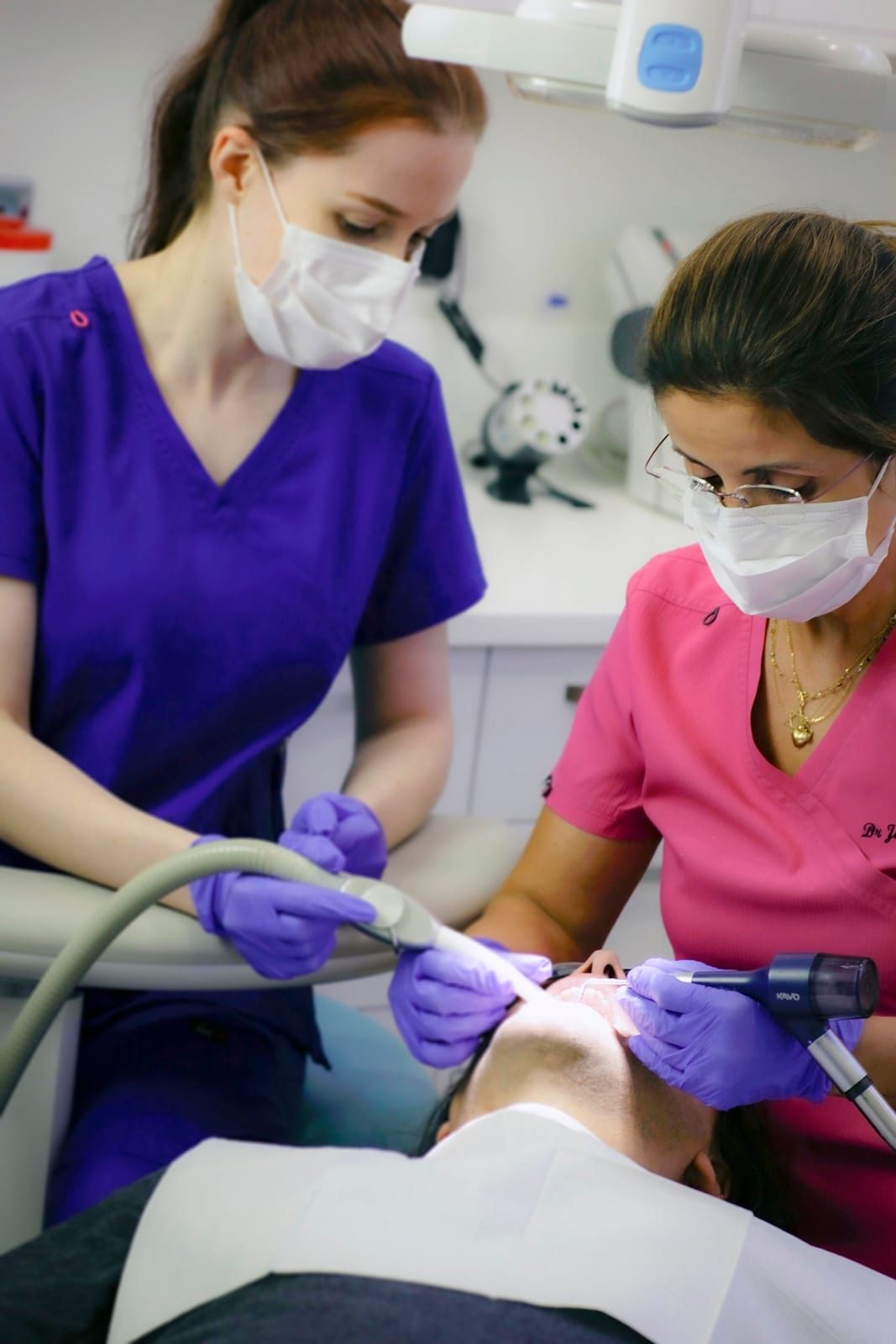
If you’re reading this with a slightly accelerated heart rate at the thought of even ringing a dental practice, you are in the right place. Around one in four UK adults has meaningful dental anxiety; one in ten avoids the dentist entirely because of it. We see anxious patients every day. We are not surprised, we do not judge, and we have specific ways of working that make a difficult thing more manageable.
This post is for the patient who hasn’t been to a dentist in years because of fear, the patient whose previous experience was bad, the patient who white-knuckles through the appointment hoping it’ll be over soon. It’s also for the family member trying to support someone in those categories.
Why dental anxiety develops
There’s usually one of three roots, sometimes more than one:
- A specific bad experience: often in childhood, often a school dentist, often involving force or pain. The body remembers, even when the conscious mind has moved on.
- Loss of control: lying back, mouth open, unable to speak, sharp instruments inside your head, a stranger doing something you can’t see. For some people that’s an objectively reasonable thing to find difficult.
- Sensory triggers: the sound of the high-speed handpiece, the smell of clove oil, the taste of certain materials. These are conditioned responses, not character flaws.
Sometimes it’s general anxiety that finds an expression at the dentist; sometimes it’s a specific dental phobia that’s otherwise absent from the patient’s life. Both are legitimate, and both respond to a careful approach.
What we do differently
1. We listen before we examine
The first appointment for a new anxious patient is not a clinical examination. It’s a consultation: fifteen to twenty minutes in a normal room, both of us sitting, talking about what’s brought you in, what you’re worried about, what happened previously, and what we can do that would help.
Nothing in your mouth happens at that first appointment unless you specifically want it to. Sometimes patients want to lie back briefly in the chair just to feel what that’s like; sometimes they don’t. Both are fine.
2. The stop signal
For everything we do after that, we agree a stop signal, usually a raised hand, sometimes a tap on the arm of the chair, whatever works. If you want us to pause, we pause. Not “as soon as I finish this bit”. Immediately. You’ll find that knowing you can stop us at any time makes you less likely to need to.
3. We tell you what’s happening before we do it
“I’m going to put a small mirror in now. You’ll feel cold metal touching the inside of your cheek.” That kind of running commentary, in plain language, for everything we do. No surprises.
4. Slow
We allow extra time for anxious-patient appointments. There is no charge for the extra time, and you are not slowing us down by needing breaks. We’d rather take twice as long and have you leave the chair feeling okay than rush you through and lose you to never coming back.
5. Bring someone with you
A partner, a friend, a parent, an adult child: anyone you trust to sit in the room with you during the appointment is welcome. They can hold your hand if that helps.
6. Music and headphones
Bring earphones and your own playlist. The sound of the handpiece is one of the most common trigger sensations, and listening to something familiar dampens it considerably. We don’t take it personally if you can’t hear us. We’ll tap your shoulder when we need your attention.
Dr Rosie Charles: caring for anxious patients
Our Associate Dentist Dr Rosie Charles places gentle, personalised care at the heart of how she practises. She qualified from the University of Manchester in 2024 and is especially focused on helping nervous patients feel listened to and at ease, taking the time to explain each step and to build trust before any treatment begins.
If you’d like to book your first appointment with Dr Charles, mention it when you call us on 020 3971 2000 or in the contact form. We’ll make sure you have the time you need.
When anxiety needs more than a gentle approach: IV sedation
For some patients, however careful the approach, the prospect of any treatment is too much to manage. That’s not a failure on anyone’s part. Some anxiety needs pharmacological help.
We work with a visiting consultant anaesthetist who provides IV sedation in the practice for patients who need it. With IV sedation:
- You’re conscious and able to follow instructions throughout (it’s not general anaesthetic)
- You’re profoundly relaxed; most patients have very little memory of the appointment afterwards
- A trusted person needs to accompany you home and stay with you for the rest of the day
- You can’t drive for 24 hours
IV sedation is quoted per case, depending on length of treatment and complexity. It’s particularly useful for longer multi-tooth treatment that would otherwise need several anxiety-laden appointments. Many patients prefer one sedated session to four awake ones.
For nervous extractions specifically, see our extraction guide.
”It’s been years”: the conversation we have most often
The single biggest barrier to anxious patients coming back is shame. Patients who’ve avoided the dentist for a long time tell us they’re worried we’ll be shocked, disappointed, or lecturing.
We aren’t. We see this every week. The honest truth is that most patients who’ve been away for a decade have one or two things that need attention and a lot that’s fine. We’ll work through it at your pace, prioritise honestly, and present options without pressure. You don’t have to commit to fixing everything at once. Many anxious patients build up to bigger treatment over the course of a year or two, and that’s a perfectly reasonable path.
If you haven’t been to a dentist in five years or ten years or longer, please come. The first visit will be easier than you think. And if part of the hesitation is deciding where to go, our guide to choosing a dentist in Edgware gives you seven questions to ask any practice, including us.
Practical advice for the appointment
- Eat beforehand. Low blood sugar makes anxiety worse. Have something proper an hour or two before.
- Avoid caffeine on the day of the appointment if you’re sensitive to it.
- Arrive a few minutes early, not rushed.
- Take a slow walk afterwards if you can rather than rushing back to other commitments.
- Tell the reception team you’re anxious when you book. They’ll route you to the right appointment length and the right clinician.
- Schedule for the time of day you feel calmest. For most anxious patients that’s mid-morning; some prefer first appointment of the day so it isn’t hanging over them.
Frequently asked
Will you judge me for not having been in years?
No. We see this every week. We will not lecture you, and we will not be shocked by what’s in your mouth. Whatever it is, we’ve seen worse. And we’ve fixed it.
Can my partner stay in the room?
Yes. You’re welcome to bring a partner, friend, parent, or trusted family member into the surgery with you. Most anxious patients find it helps.
What if I cry?
Many anxious patients do, especially at the first appointment when years of avoiding the dentist finally happen. We’ll pause, give you a tissue, and continue when you’re ready. It’s not a moment of embarrassment for either of us.
Will I be sedated for a simple check-up?
Almost never necessary, and we’d avoid it if we can. A check-up is the lowest-anxiety appointment we offer: visual examination, no instruments touching the teeth except a small mirror, no decisions made. We’d encourage you to try it without sedation, and the experience often quietens the fear for next time.
How long is the first appointment?
For an anxious new patient, we typically allow 30–45 minutes, most of that conversation. You can come and just talk, and book a clinical visit later if you’d prefer. There’s no minimum at the first visit.
What does IV sedation cost?
Quoted per case, depending on the duration of treatment and the anaesthetist’s time. Generally £400–£800 in addition to the dental fees. We’d discuss this honestly at the consultation if sedation is on the table.
If you’d like to start with a conversation rather than an examination, get in touch or call us on 020 3971 2000 and mention you’re anxious. We’d be glad to hear from you.
— Dr Jacqueline Jacobs
Find us in Edgware.
Free 30-minute parking out front and a step-free entrance. Pop in for a look or call ahead — we usually answer within a few rings.
Campos Dental
70 Edgware Way
Edgware, HA8 8JS
Call us
020 3971 2000Contact us
Send us a message →Opening hours
- Mon – Fri 9:00 am – 5:30 pm (closed 1–2 pm)
- Sat by appointment
- Sun closed
Questions about your situation?
If anything in this article applies to you and you'd like to talk it through, give us a call.
Book Online opens in our secure Dentally Portal — verified by SMS. All treatment plans start with a check-up.